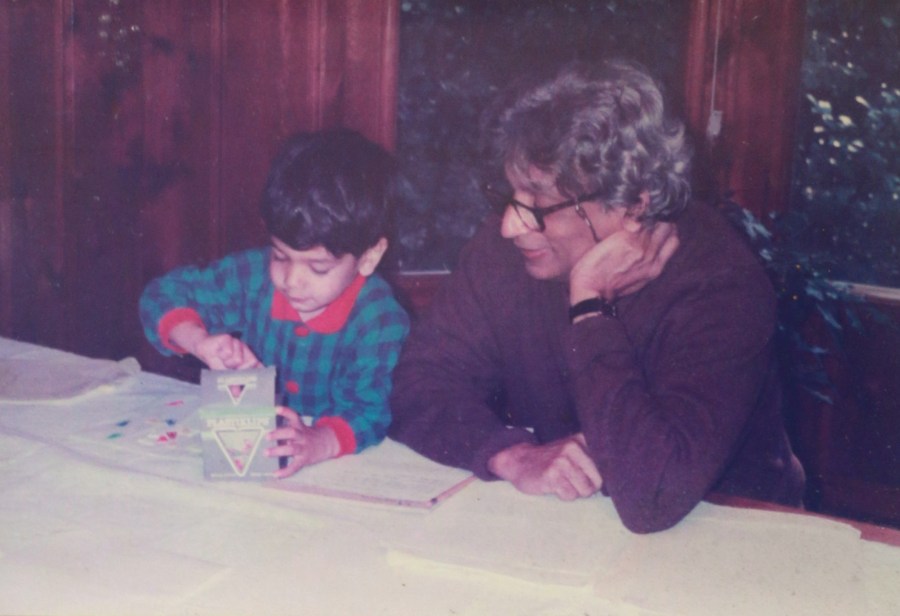
ගණනාථ ඔබේසේකර: බෞද්ධ හෘදය සාක්ෂිය සොයා/ Gananath Obeyesekere: In search of Buddhist Conscience
Gananath Obeyesekere : In search of Buddhist Conscience, a documentary on Gananath Obeyesekere, a world-renowned Sri Lankan anthropologist focuses on academic work and biography of Gananath Obeyesekere. The documentary uses interviews with academics, friends and family of Obeyesekere and Obeyesekere himself. It includes footage of Obeyesekere’s field visits, lectures and speaking engagements, and personal footage at home. It contains themes ranging from Buddhism, nationalism, psychoanalysis, cannibalism, Vadda primitivism to Sahlins- Obeyesekere debate on the death of Captain Cook. The documentary discusses Obeyesekere’s study of Medus’s Hair, symbolic processes associated with the special religiosity of the ecstatic priests in Kataragama. To him certain cultural symbols are articulated by individual experience. His idea of personal symbols is inspired by Max Weber’s view of culture and Freud’s theory of unconscious motivation. According to Obeyesekere Freud dethrons the Cartesian primacy of consciousness. His reading of Freudian psychoanalysis is a hermeneutic criticism of positivist tradition in psychoanalysis. He is influenced by such hermeneutical philosophers as Ricoeur and Gadamer. Then comes discussion on public symbol, the Pattini cult. The section on the Cult of the Goddess Pattini discusses two types of rituals associated with the Pattini cult. Killing and resurrection is the first type. Obeyesekere describes it as a solemn ritual. And he calls it dromena with a term from ancient Greek religion. In dromenon the psychological problems of the group are brought under fine ego and cognitive control. The other type he mentions is cathartic rituals. These rituals that parody the numinous give a direct expression to the anxieties dominating people. That which is camouflaged in dromenon is laid bare in the cathartic rituals. The goddess Pattini is the main goddess in the pantheon of folk Buddhist tradition. The prevalence of the cult is historically related to King Gajaba. To him all Sinhalese groups were at some period or other immigrants from South India. The Gajabahu myth according to Obeyesekere is a symbolic way of expressing this sociological fact. The ideological debate between nationalists and liberals in Sri Lanka is one between historical continuity of a Sinhala Buddhist unitary state and the rejection of this notion as a myth built on modernist concepts. The documentary has a discussion on Obeyesekere’s intervention in this debate. Leaving aside those modern concepts, he proposes to initiate this inquiry based on the idea of “Buddhist Whatever”. Gananath Obeyesekere in his search of “Buddhist whatever” discovers that it is nothing but the Sasana. The movement of Olcott and the Movement of Dharmapala had a great impact on the transformation of Buddhism in modern history of Sri Lanka. He understands this transformation as rationalization of Buddhism through Olcott’s movement on the one hand and as politicization of Buddhism through Dharmapala’s movement on the other. He Sees these two aspects and the resultant processes paved the way for dismantling the conscience of the Sinhala Buddhists. The documentary discusses his idea protestant Buddhism.The debate between Sahlins- Obeyesekere was whether Captain Cook was a god or not a god. Obeyesekere pointed out that White civilizer is a god to native is a structure in the long run in European thought. So, the documentary has a discussion on the debate and cannibalism in relation to European myth making. In the final section in his idea of Vadda primitivism he shows how the British invented modern Vadda as aborigines. It is a bi-lingual (Sinhala and English) film with music composed by Nadeeka Guruge, narrated by Dharmasiri Bandaranayaka, camera and edited by Chathura Madhusanka, directed by Dimuthu Saman Wettasinghe, and produced by ‘Kathika’ Study Circle. The assistant direction and production coordination by Dinesh Kumara.
 'කතිකා' සංවාද මණ්ඩපය 'kathika' sanvada mandapaya