Professor Gananath Obeyesekere spoke of the dry presentation of Buddhist teachings in abstract intellectual terms that he remembers from his youth. These were in contrast to the experience of going to pilgrimage places where pilgrims and their teachers told stories based on vernacular texts. He summarized one such story in which a man married a…
'kathika' social, cultural and political review
From Gananath Obeyesekere
The Pasts of the National Flag – Gananath Obeyesekere
The pasts of the national flag: some unorthodox views on the invention of tradition by Gananath Obeyesekere organised by National Trust Sri Lanka.
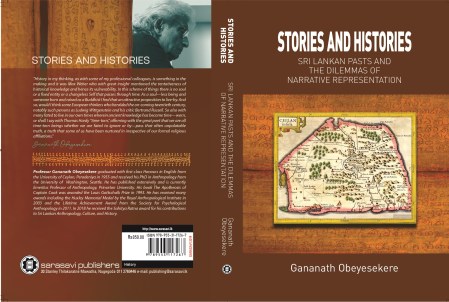
Stories And Histories – Gananath Obeyesekere
Stories And Histories: SRI LANKAN PASTS AND THE DILEMMAS OF NARRATIVE REPRESENTATION Price – Rs. 850.00 Publication- Sarasavi, Sri Lanka “In this work entitled Stories and Histories: Sri Lankan pasts and the dilemmas of narrative representation I emphasize, as in my other writings, the tentativeness of historical knowledge. History in my thinking, as with some…
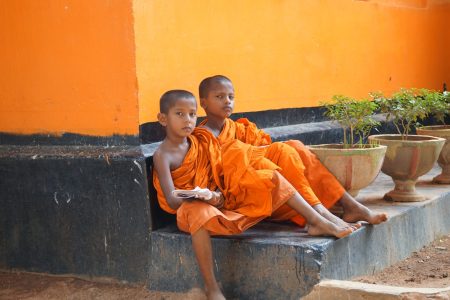
Child ordinations and the rights of children – Gananath Obeyesekere
” The more serious problem is that of sexual abuse notoriously associated with all forms of institutionalized monasticism, witness the recent cases of abuse of children put in their pastoral care even by high prelates of the Catholic Church. But Catholics have no system of child ordination and therefore the possibility of abuse of children…
“Maha Vidagama Thera and Maha Totagama Thera came from Southern India” Gananath Obeyesekere
Sinhala Histories in Kandy Period : Palm Leaf Manuscripts Known as ‘Vitti Pot’ and ‘Kadaim Pot’, The Address by the Guest of Honour, Gananath Obeyesekere at The Open Univesity Research Sessions 2018.
The Rise of the Labour Movement in Ceylon – Review by Gananath Obeyesekere
Visakha Kumari Jayawardene. The Rise of the Labour Movement in Ceylon. Durham, N.C.: Duke University Press, 1972. Pp. 382. Review by Gananath Obeyesekere University of California, San Diego “The naive-Marxist view of the proletariat infuses the book in another way. The proletarians are the good guys, the British and the conservative Ceylonese elite (the ruling…